Article
Beyond Compliance - How Suppliers and Traders Can Turn CBAM into a Competitive Advantage
4 Aug 2025
A New Reality for Global Trade
From January 2026, the Carbon Border Adjustment Mechanism (CBAM) will stop being a reporting exercise and become a financial reality. Importers of steel, aluminium, cement, fertilizers, electricity, and hydrogen must purchase CBAM certificates in August 2026 reflecting the EU carbon price. Suppliers and traders outside the EU are under pressure: provide verifiable emissions data or risk losing competitiveness.
The European Commission has been clear: CBAM is not a side experiment. It is a cornerstone of the EU’s Green Deal, synchronized with the phase-out of free allowances under the EU Emissions Trading System (ETS). For traders and suppliers, this means one thing: the cost of carbon is now embedded in the cost of doing business with Europe.
But while the conversation is dominated by compliance checklists and penalty warnings, there’s a bigger strategic angle: CBAM is reshaping global supply chains, pricing power, and competitive positioning. Those who adapt quickly won’t just comply—they’ll capture market share.
The Immediate Pain Points for Suppliers and Traders
Data Gaps and Reporting Complexity
Importers must report embedded emissions per installation and product. If suppliers fail to provide accurate data, EU buyers fall back on default values, based on the EU’s worst-performing plants. That means inflated carbon costs passed on to the supplier’s product.
Pricing Power at Risk
Without transparent emissions data, EU buyers are forced to assume higher costs, eroding supplier margins. In commodity markets like aluminium and steel, even a €20–30/tCO₂ miscalculation can wipe out contracts.
Traders in the Crossfire
Traders act as intermediaries but now also carry liability. They must ensure emissions data from multiple suppliers is accurate, or face penalties themselves.
Compressed Timelines
The transitional period (2023–2025) was meant as a rehearsal. Many suppliers treated it lightly, using default values. Now, with verification mandatory, there is no buffer.
Why Defaulting to Default Values Is a Losing Strategy
During the transition, default values provided temporary relief. But from 2026, relying on defaults means being benchmarked against the EU’s dirtiest producers. For high-emission grids (South Africa, India, parts of Asia), this can double the carbon cost attached to exports. For example fertilizer exporters relying on natural gas without emissions abatement could see CBAM costs equivalent to 10–15% of product value.
This is not just a compliance issue it’s a market access issue. Suppliers that provide verified low-emissions data can offer buyers lower CBAM exposure, making their product the preferred choice.
Strategic Leverage: Turning Compliance into Differentiation
Forward-looking suppliers and traders are shifting mindset from “compliance cost” to “competitive edge.” Here’s how:
1. Supplier Readiness Programs
Building internal systems to measure, document, and share emissions data across the supply chain. This means:
Setting up internal MRV (Monitoring, Reporting, Verification) processes aligned with EU methodology.
Training staff on CBAM requirements.
Using standardized templates for buyer communication.
The cost of setting this up is dwarfed by the value of keeping EU contracts.
2. Carbon Cost Integration in Pricing
Rather than leaving buyers to absorb the CBAM shock, proactive suppliers are integrating carbon costs transparently into pricing models. This prevents last-minute renegotiations and protects margins.
3. Investing in Low-Carbon Production Routes
While capital intensive, some exporters are already repositioning. Morocco’s OCP is developing a €7bn green ammonia plant to hedge against gas price volatility and secure low-carbon EU access. Mozambique is revisiting hydropower projects to supply its aluminium smelters with clean electricity.
4. Partnership with Traders
Traders who manage multiple suppliers are investing in emissions data platforms. By aggregating and standardizing supplier data, they position themselves as the reliable gateway for EU buyers navigating CBAM.
The CFO and Procurement Lens
For CFOs and procurement directors, CBAM is no longer a sustainability but a P&L issue.
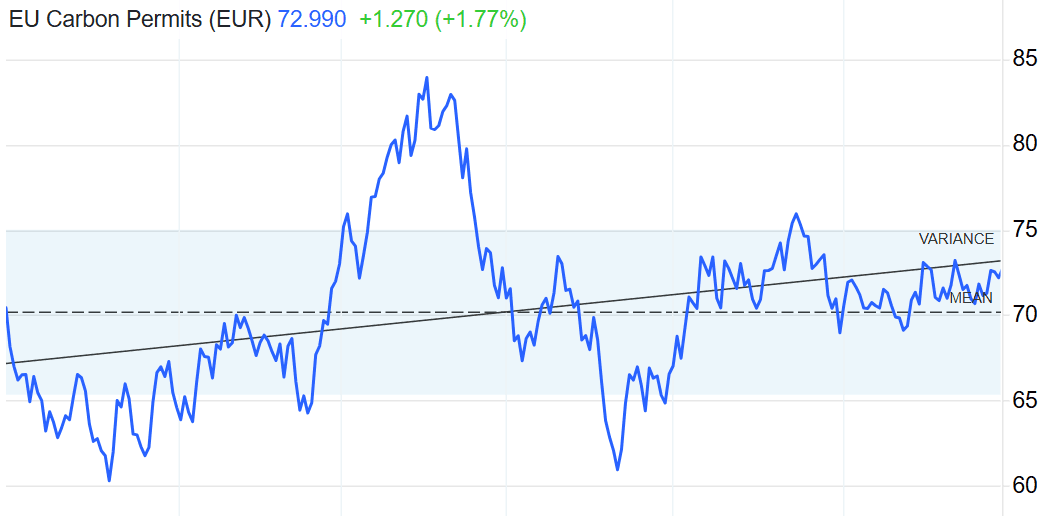
Budgeting Carbon Costs: EU ETS prices have ranged from €60–100/tCO₂ in recent years and are forecast to trend toward €150–200/tCO₂ by 2030. Every misreported tonne is a direct cost.
Contract Structures: Buyers are pushing for CBAM-aligned clauses, shifting liability to suppliers. Without robust data systems, suppliers risk contractual disputes.
Market Share Shifts: EU manufacturers are actively screening suppliers for emissions intensity. Low-carbon exporters will become preferred partners.
The strategic question is no longer “How do we comply?” but “How do we make carbon transparency a lever in price negotiations and market positioning?”
Case Studies: Winners and Losers Emerging
Morocco – First Movers in Fertilizers
By investing early in green ammonia, OCP is positioning itself as a premium supplier. EU buyers will accept slightly higher base prices in exchange for lower CBAM exposure.South Africa – Metals Under Pressure
With coal-heavy electricity, South African steel and aluminium exporters face some of the world’s highest embedded emissions. Without decarbonization pathways, they risk losing EU market share worth billions.Traders – From Risk Bearers to Data Brokers
Large trading houses are building emissions reporting infrastructure, turning CBAM compliance into a service offering. This adds stickiness to client relationships and positions traders as indispensable intermediaries.
The Bigger Picture: CBAM Is a Global Signal
CBAM is already inspiring copycats. The UK, Canada, and the US are exploring similar border carbon adjustments. This means adapting is not just about maintaining EU access. It’s about preparing for a decarbonizing global economy where carbon costs are a standard trade variable.
For exporters, this creates two realities:
Delay equals decline. Waiting until enforcement bites means losing contracts.
Early action compounds advantage. Those who build data systems and decarbonize first will be rewarded with premium buyer relationships.
Where Entrenovu Fits In
At Entrenovu, we sit exactly where suppliers and traders feel the pressure: the intersection of regulation, technology, and market access.
CBAM Training & Certification: We train company teams under IACBAM 3004:2025, preparing staff for certification and immediate operational readiness.
Supplier Readiness Programs: We design practical workflows for emissions data collection and integration into pricing strategies.
Declarant Support: We help EU importers manage CBAM reporting and build resilient supplier relationships.
Strategic Insights: We guide clients on how to position carbon transparency as a competitive edge in procurement negotiations.
We don’t sell theory. We deliver hands-on systems and workshops that help companies survive today’s CBAM requirements—and win tomorrow’s contracts.
Conclusion: From Compliance Burden to Market Strategy
CBAM is not the end of trade but the beginning of a new trade paradigm. For suppliers and traders, the question is stark:
Will you let CBAM erode your margins and market share?
Or will you build the systems that make you the supplier of choice in Europe’s carbon-conscious economy?
The companies that treat CBAM as a market strategy, not just a compliance task, will emerge as winners. Entrenovu exists to make sure you are one of them.